girlbox

periods

Foods That Help with Hormonal Mood Swings

Foods That Help With Hormonal Mood Swings

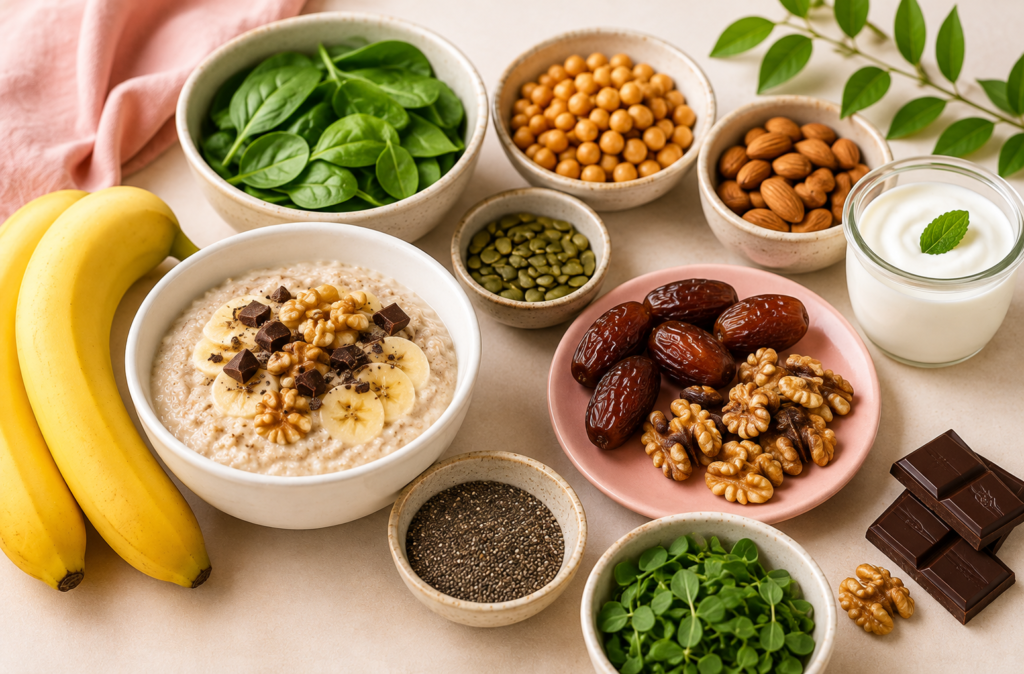
Quick Answer: Hormonal mood swings are caused by fluctuations in estrogen and progesterone that affect brain serotonin levels. Eating complex carbohydrates, magnesium-rich greens, omega-3 sources like walnuts, and vitamin B6 foods such as bananas and chickpeas can help stabilise these shifts. Persistent or severe mood changes, however, require evaluation by a PMDC-registered gynaecologist. You woke up fine. You drank your chai, replied to a few messages, and started your day. By 3 pm, you wanted to cry because the daal was slightly too salty. By 6 pm, you snapped at your sister over a borrowed scarf. Now it is 9 pm and you are sitting on your bed wondering why you feel like a completely different person from the woman who woke up this morning. If this pattern repeats every month — or worse, seems to appear out of nowhere during your cycle — you are likely dealing with hormonal mood swings. The connection between your ovaries and your temper is real, and while food cannot cure a clinical hormone disorder, the right desi kitchen staples can absolutely soften the edges of the emotional rollercoaster. What Are Hormonal Mood Swings Actually? Hormonal mood swings are rapid emotional shifts — irritability, anxiety, sadness, or anger — triggered by changing levels of estrogen and progesterone during the menstrual cycle. These hormones regulate serotonin, the brain chemical that stabilises mood, and when they drop sharply before a period, serotonin follows. behind the scene Your endocrine system is not a switch. It is a feedback loop. Estrogen rises during the first half of your cycle, peaks around ovulation, and then crashes alongside progesterone in the week before menstruation. That crash is what makes you feel volatile. For some Pakistani women, this is mild: a day of feeling off. For others, it is debilitating rage or despair that damages relationships and work performance. Understanding that this is a biochemical event, not a personality failure, is the first step toward managing it. Which Foods Actually Help Stabilise Mood Swings? Foods that help with hormonal mood swings are those that support steady blood sugar, provide building blocks for serotonin, and supply magnesium and B vitamins that buffer stress responses. Protein, complex carbohydrates, and healthy fats matter more than any single superfood. Your brain needs tryptophan — an amino acid — to manufacture serotonin. It needs magnesium to calm the nervous system. It needs stable glucose to prevent the adrenaline spikes that make anxiety worse. According to research published in the Journal of Affective Disorders, diets rich in whole grains, legumes, nuts, and fatty fish correlate with lower rates of premenstrual mood disturbance. The key is consistency. One bowl of daal will not fix a month of skipped meals and chai-samosa afternoons. Desi Foods That Support Hormonal Balance These seven food categories use ingredients already in your kitchen or available at any Pakistani bazaar. Each targets a specific mechanism behind mood instability. 1. Complex carbohydrates from whole grainsBrown rice, whole wheat roti, and oats provide slow-releasing glucose. Your brain consumes roughly 20% of your daily energy, and it panics when blood sugar drops. Swap white flour parathas for roti made from desi atta during the week before your period. 2. Legumes for B vitamins and steady energyChana, masoor daal, and lobia are rich in vitamin B6, which assists in serotonin production. A cup of cooked chana contains nearly half your daily B6 requirement. Daal is not boring food; it is hormonal infrastructure. 3. Leafy greens for magnesiumPalak, methi leaves, and sarson ka saag deliver magnesium, a mineral that acts as a natural relaxant for the nervous system. Pakistani women are frequently magnesium-deficient due to diets heavy in refined grains and low in fresh vegetables. Add a handful of steamed palak to your lunch plate four times a week. 4. Nuts and seeds for omega-3s and zincWalnuts, almonds, and flaxseeds provide omega-3 fatty acids and zinc. Omega-3s reduce inflammation that can worsen mood disorders, while zinc supports progesterone balance. Keep a small box of mixed nuts in your university bag or office drawer. A small handful costs roughly PKR 50-80 and lasts all afternoon. 5. Bananas and dates for tryptophan and potassiumBananas contain tryptophan and vitamin B6. Dates provide potassium and natural sweetness without the insulin spike of refined sugar. Together they make an ideal 4 pm snack when premenstrual cravings hit. 6. Dahi for gut-brain axis supportYour gut produces a significant portion of your body’s serotonin. Plain yoghurt with live cultures supports healthy gut bacteria, which in turn influences mood regulation. Avoid flavoured yoghurt with added sugar; buy plain dahi and add a drizzle of honey or chopped dates. 7. Dark chocolate for magnesium and pleasureCocoa is one of the richest dietary sources of magnesium. A small square of dark chocolate — 70% cocoa or higher — after dinner can satisfy cravings while delivering a genuine mineral boost. Skip the milk chocolate packets; they contain too much sugar and too little cocoa. Desi Food Active Nutrient How It Helps Best Timing Approx. Cost (PKR) Masoor daal / chana Vitamin B6 Serotonin synthesis Lunch 40–60 per serving Palak / methi Magnesium Nervous system calming Lunch or dinner 30–50 per bunch Walnuts / almonds Omega-3, zinc Reduces inflammation; supports progesterone Mid-afternoon snack 50–80 per handful Banana + dates Tryptophan, potassium Mood stabilisation; natural energy 3–4 pm slump 40–60 combined Plain dahi Probiotics Gut-brain serotonin support With lunch 40–60 per cup Dark chocolate (70%+) Magnesium Stress relief; mineral boost After dinner 100–150 per bar What Should You Avoid Eating? Avoid refined sugar, excessive caffeine, and ultra-processed fried snacks during the week before your period. These create blood sugar spikes followed by crashes that mimic and worsen anxiety. That 3 pm samosa from the canteen? The refined flour and reheated oil spike your insulin, which destabilises mood within an hour. Your fourth cup of chai? Caffeine raises cortisol, the stress hormone, at exactly the moment your body is already struggling with progesterone withdrawal. You do not need to eliminate these entirely.

Foods That Help With Hormonal Mood Swings Read More »
How to Deal With Period Tracking Apps the Right Way

How to Deal With Period Tracking Apps the Right Way

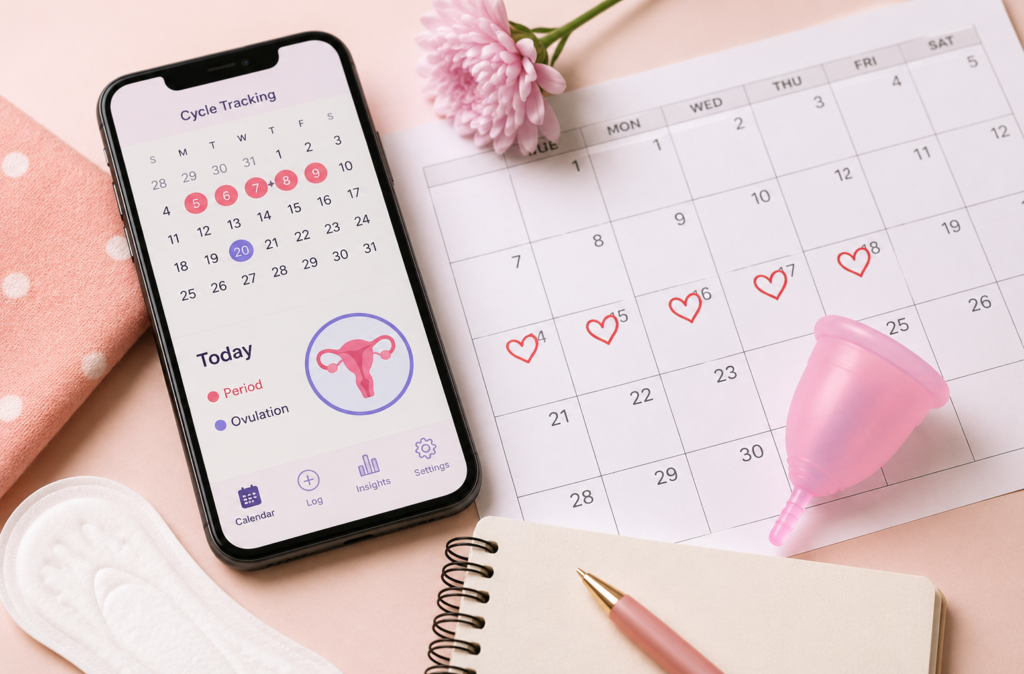
Period tracking apps log your menstrual cycle dates and symptoms to predict future periods and fertile windows. They work best as digital diaries, not medical diagnostic tools. For Pakistani women managing irregular cycles or PCOS, apps can support your routine, but they should never replace a qualified gynaecologist’s examination and advice. Your friend swore by her period tracker. She never gets caught without a pad, and she knows her fertile window down to the hour. You downloaded the same app, entered your last period date, and waited. Three months later, the app says you’re “late” — again — and you’re sitting in your university library wondering if something is seriously wrong. Here’s the truth most of us miss. Period tracking apps are only as good as the data you feed them, and most default to a 28-day cycle that doesn’t match South Asian hormonal realities. If you’ve been stressing over app notifications, this guide will show you how to use these tools properly without letting them replace your own body awareness — or your gynaecologist. What Exactly Do Period Tracking Apps Do? Period tracking apps are smartphone programmes that record your menstrual cycle dates, flow intensity, and symptoms to forecast your next period and ovulation window. They cannot measure hormone levels or see your ovaries; they simply use algorithmic pattern recognition based on what you logged last month. Most free versions rely on calendar math. You input the first day of bleeding, how many days it lasts, and symptoms like cramps, acne, or mood shifts. After two to three cycles, the app spots a pattern and pushes predictions to your home screen. Premium versions may offer basal body temperature charting or cervical mucus logging, but the majority of Pakistani users stick to the free tier. Think of an app as a digital diary that does maths, not a pocket ultrasound machine. Why Period Tracking Apps Are Popular Among Pakistani Women Pakistani women use period trackers to manage busy schedules, prepare for gynaecologist visits, and monitor conditions like PCOS in a culture where period talk is often private. Between university deadlines, office commutes on Karachi’s Red Bus, and managing period care in spaces with limited facilities, knowing when to expect bleeding matters. Many women also use these apps to collect evidence before visiting a doctor. If your family thinks you’re too young for a hormone check, showing three months of logged cycle data can strengthen your case for a proper evaluation. Apps also help women observing Ramadan plan around their periods, and those with PCOS track whether their cycles are lengthening or shortening over time. How to Choose a Period Tracking App That Actually Works for You Choose a period tracking app that allows custom cycle lengths, protects your privacy, and works offline without forcing you into a 28-day default. South Asian women often have cycles ranging from 26 to 35 days, so the app must let you override standard settings during the first week. Feature Flo Clue Marham Period Calendar Free version available Yes Yes Yes Yes Custom cycle length input Yes Yes Limited Yes Strong privacy protection Moderate High High Low Connects to local doctors No No Yes No Works offline Partial Yes Yes Yes PCOS symptom tracking Detailed Moderate Basic Basic The Biggest Mistakes Women Make With Period Tracker The most common mistake is treating app predictions as medical diagnoses rather than educated guesses based on past data. An algorithm cannot see inside your fallopian tubes. When to Put the App Away and Call Your Gynaecologist See a gynaecologist if your cycles fall outside the 21-to-35-day range for three months, or if you experience severe pain, bleeding between periods, or no period for over 90 days. Apps are excellent for pattern spotting, but they cannot diagnose PCOS, endometriosis, thyroid disorders, or perimenopause. In Pakistan, where anaemia and vitamin D deficiency are common, a “late” period might signal nutritional gaps that no algorithm can detect. If your tracker is causing anxiety rather than clarity, stop checking it for one cycle and schedule an appointment with a PMDC-registered gynaecologist instead. You can read more about when to see a doctor about irregular periods on GirlBox. Frequently Asked Questions Are period tracking apps accurate if my cycle is irregular?Most apps become less accurate with irregular cycles because they rely on averaging past dates. If you have PCOS or thyroid issues, use the app purely for symptom logging rather than predictions. Is my period data safe with these apps in Pakistan?Data protection varies. International apps may store information on servers outside Pakistan. Local apps keep data within the country, but always read the privacy policy. Avoid apps that require social media logins. Can teenagers use period tracking apps?Yes. For adolescents tracking their first few years of menstruation, apps help normalise cycle awareness. However, teenage cycles are naturally irregular for the first two years, so predictions should not be treated as definitive. Do I need a premium subscription?No. Free versions handle calendar logging, symptom notes, and basic predictions adequately. Pay only if you need features like basal body temperature charting or PDF export for your doctor. Should I track my period if I am not sexually active?Absolutely. Period tracking is about understanding your overall reproductive health, not just fertility. It helps you notice changes in flow, pain levels, and mood that might indicate hormonal shifts. Period tracking apps are useful servants but terrible masters. Use one to log your cycle, note your symptoms, and walk into your gynaecologist’s office with three months of solid data. Do not use one to diagnose yourself, time contraception, or panic over a late notification when your body has always marched to its own rhythm. Your next step is simple: download one app today. Log your last period date, disable the 28-day default if your cycles run longer, and set a weekly reminder to update your symptoms. After three complete cycles, book a consultation and show your doctor the data. That is how you deal with period

How to Deal With Period Tracking Apps the Right Way Read More »

Scroll to Top