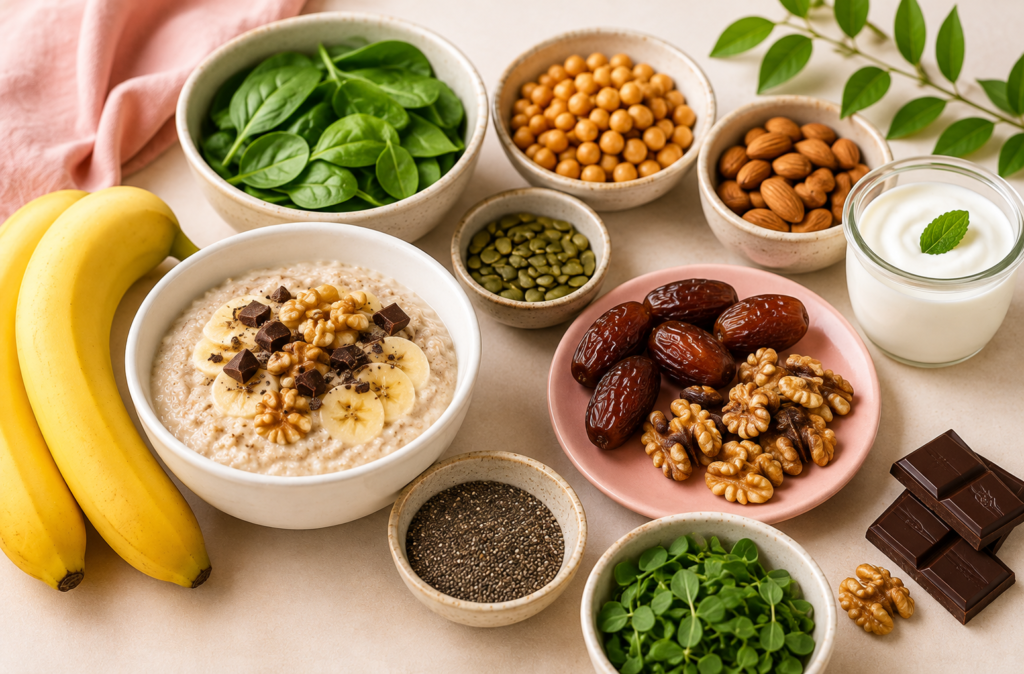
Quick Answer: Hormonal mood swings are caused by fluctuations in estrogen and progesterone that affect brain serotonin levels. Eating complex carbohydrates, magnesium-rich greens, omega-3 sources like walnuts, and vitamin B6 foods such as bananas and chickpeas can help stabilise these shifts. Persistent or severe mood changes, however, require evaluation by a PMDC-registered gynaecologist.
You woke up fine. You drank your chai, replied to a few messages, and started your day. By 3 pm, you wanted to cry because the daal was slightly too salty. By 6 pm, you snapped at your sister over a borrowed scarf. Now it is 9 pm and you are sitting on your bed wondering why you feel like a completely different person from the woman who woke up this morning. If this pattern repeats every month — or worse, seems to appear out of nowhere during your cycle — you are likely dealing with hormonal mood swings. The connection between your ovaries and your temper is real, and while food cannot cure a clinical hormone disorder, the right desi kitchen staples can absolutely soften the edges of the emotional rollercoaster.
What Are Hormonal Mood Swings Actually?
Hormonal mood swings are rapid emotional shifts — irritability, anxiety, sadness, or anger — triggered by changing levels of estrogen and progesterone during the menstrual cycle. These hormones regulate serotonin, the brain chemical that stabilises mood, and when they drop sharply before a period, serotonin follows.
behind the scene
Your endocrine system is not a switch. It is a feedback loop. Estrogen rises during the first half of your cycle, peaks around ovulation, and then crashes alongside progesterone in the week before menstruation. That crash is what makes you feel volatile. For some Pakistani women, this is mild: a day of feeling off. For others, it is debilitating rage or despair that damages relationships and work performance. Understanding that this is a biochemical event, not a personality failure, is the first step toward managing it.
Which Foods Actually Help Stabilise Mood Swings?
Foods that help with hormonal mood swings are those that support steady blood sugar, provide building blocks for serotonin, and supply magnesium and B vitamins that buffer stress responses. Protein, complex carbohydrates, and healthy fats matter more than any single superfood.
Your brain needs tryptophan — an amino acid — to manufacture serotonin. It needs magnesium to calm the nervous system. It needs stable glucose to prevent the adrenaline spikes that make anxiety worse. According to research published in the Journal of Affective Disorders, diets rich in whole grains, legumes, nuts, and fatty fish correlate with lower rates of premenstrual mood disturbance. The key is consistency. One bowl of daal will not fix a month of skipped meals and chai-samosa afternoons.
Desi Foods That Support Hormonal Balance
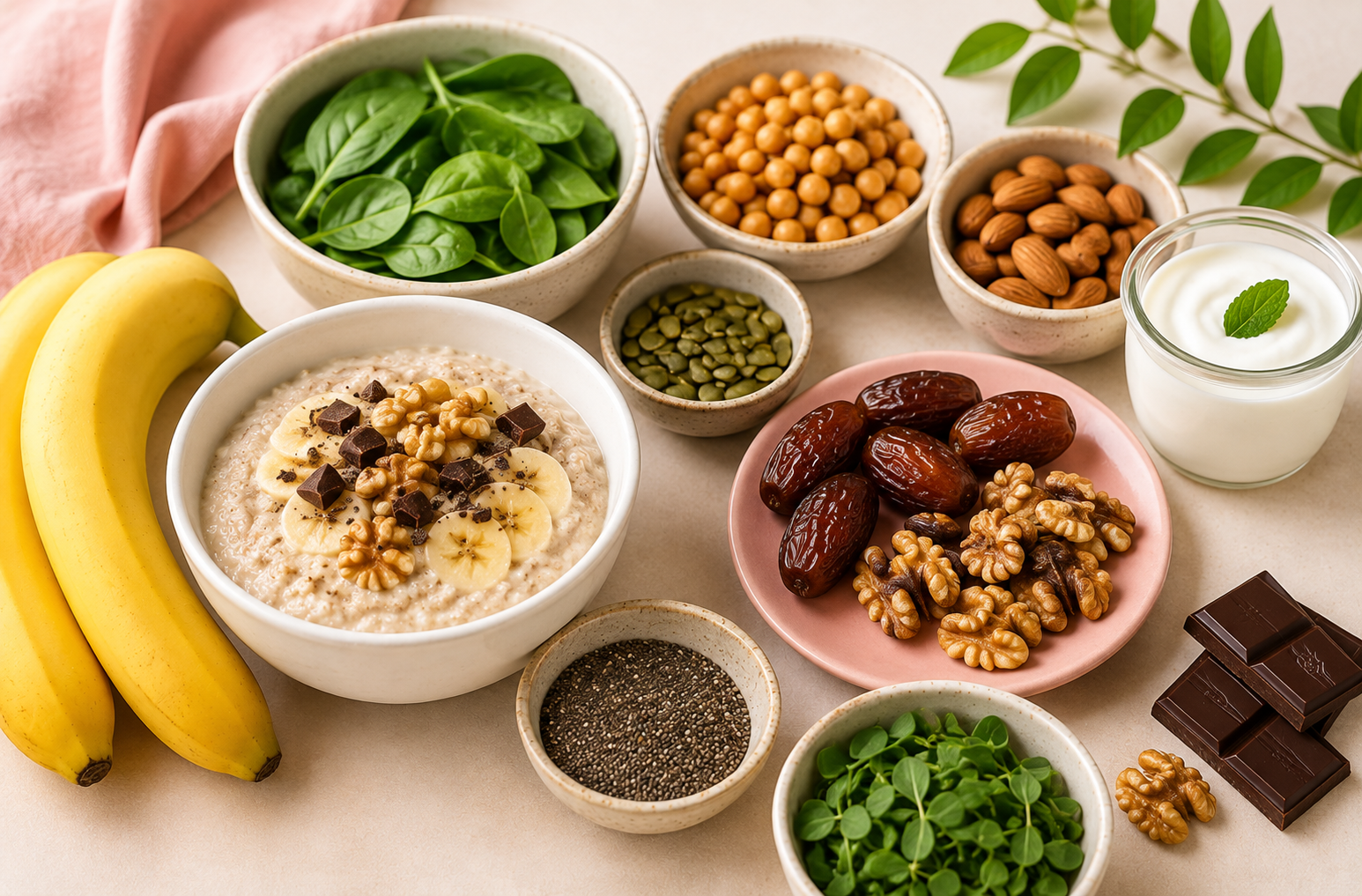
These seven food categories use ingredients already in your kitchen or available at any Pakistani bazaar. Each targets a specific mechanism behind mood instability.
1. Complex carbohydrates from whole grains
Brown rice, whole wheat roti, and oats provide slow-releasing glucose. Your brain consumes roughly 20% of your daily energy, and it panics when blood sugar drops. Swap white flour parathas for roti made from desi atta during the week before your period.
2. Legumes for B vitamins and steady energy
Chana, masoor daal, and lobia are rich in vitamin B6, which assists in serotonin production. A cup of cooked chana contains nearly half your daily B6 requirement. Daal is not boring food; it is hormonal infrastructure.
3. Leafy greens for magnesium
Palak, methi leaves, and sarson ka saag deliver magnesium, a mineral that acts as a natural relaxant for the nervous system. Pakistani women are frequently magnesium-deficient due to diets heavy in refined grains and low in fresh vegetables. Add a handful of steamed palak to your lunch plate four times a week.
4. Nuts and seeds for omega-3s and zinc
Walnuts, almonds, and flaxseeds provide omega-3 fatty acids and zinc. Omega-3s reduce inflammation that can worsen mood disorders, while zinc supports progesterone balance. Keep a small box of mixed nuts in your university bag or office drawer. A small handful costs roughly PKR 50-80 and lasts all afternoon.
5. Bananas and dates for tryptophan and potassium
Bananas contain tryptophan and vitamin B6. Dates provide potassium and natural sweetness without the insulin spike of refined sugar. Together they make an ideal 4 pm snack when premenstrual cravings hit.
6. Dahi for gut-brain axis support
Your gut produces a significant portion of your body’s serotonin. Plain yoghurt with live cultures supports healthy gut bacteria, which in turn influences mood regulation. Avoid flavoured yoghurt with added sugar; buy plain dahi and add a drizzle of honey or chopped dates.
7. Dark chocolate for magnesium and pleasure
Cocoa is one of the richest dietary sources of magnesium. A small square of dark chocolate — 70% cocoa or higher — after dinner can satisfy cravings while delivering a genuine mineral boost. Skip the milk chocolate packets; they contain too much sugar and too little cocoa.
| Desi Food | Active Nutrient | How It Helps | Best Timing | Approx. Cost (PKR) |
|---|---|---|---|---|
| Masoor daal / chana | Vitamin B6 | Serotonin synthesis | Lunch | 40–60 per serving |
| Palak / methi | Magnesium | Nervous system calming | Lunch or dinner | 30–50 per bunch |
| Walnuts / almonds | Omega-3, zinc | Reduces inflammation; supports progesterone | Mid-afternoon snack | 50–80 per handful |
| Banana + dates | Tryptophan, potassium | Mood stabilisation; natural energy | 3–4 pm slump | 40–60 combined |
| Plain dahi | Probiotics | Gut-brain serotonin support | With lunch | 40–60 per cup |
| Dark chocolate (70%+) | Magnesium | Stress relief; mineral boost | After dinner | 100–150 per bar |
What Should You Avoid Eating?
Avoid refined sugar, excessive caffeine, and ultra-processed fried snacks during the week before your period. These create blood sugar spikes followed by crashes that mimic and worsen anxiety.
That 3 pm samosa from the canteen? The refined flour and reheated oil spike your insulin, which destabilises mood within an hour. Your fourth cup of chai? Caffeine raises cortisol, the stress hormone, at exactly the moment your body is already struggling with progesterone withdrawal. You do not need to eliminate these entirely. You need to stop relying on them as emotional crutches during the days when your hormones are already fragile. Replace the samosa with roasted chana. Replace the extra chai with green tea or simply water. Small swaps matter enormously when your endocrine system is sensitive.
When Is It More Than Just Mood Swings?
See a gynaecologist if mood swings last more than two weeks, include suicidal thoughts, or severely disrupt work and relationships. These can signal premenstrual dysphoric disorder (PMDD), thyroid dysfunction, or clinical depression rather than standard hormonal fluctuation.
Dr. Rabia Khan, a Lahore-based gynaecologist, notes: “In my clinical experience, the most overlooked cause of severe premenstrual mood disturbance is not dietary deficiency alone, but undiagnosed thyroid imbalance layered on top of normal cycle changes. If food and rest are not helping, we need to check TSH and progesterone levels.” Do not let anyone — including yourself — dismiss persistent emotional pain as “just hormones.” Your suffering deserves a name and a treatment plan. If you are tracking your cycle and notice that mood crashes begin at ovulation and worsen until bleeding starts, mention this specific pattern to your doctor. It is a clinical clue.
Frequently Asked Questions
Can food alone cure my hormonal mood swings?
No. Diet can significantly reduce the severity of mood swings, but it cannot cure underlying conditions like PCOS, thyroid disorders, or clinical depression. Use food as support, not replacement for medical care.
How quickly do these foods work?
You may notice subtle improvements within one cycle if you eat these foods consistently. Magnesium and B vitamin levels build over weeks, not hours. Give it at least two full menstrual cycles before judging results.
Is it normal to feel angry before my period?
Mild irritability is common. Intense rage, violent thoughts, or feeling out of control is not typical and should be discussed with a gynaecologist or mental health professional.
Should I take supplements instead of eating these foods?
Whole foods provide fibre and phytonutrients that isolated supplements lack. However, if you are severely deficient in iron, vitamin D, or B12 — common among Pakistani women — your doctor may recommend supplements alongside dietary changes.
Can these foods help during menopause too?
Yes. The same nutrients support hormonal fluctuations during perimenopause and menopause. Magnesium-rich foods and omega-3s are particularly helpful for mood stability during this transition.
Food is not a magic wand for hormonal mood swings. It is, however, a powerful lever that most Pakistani women never fully use. You do not need to overhaul your entire diet or buy imported superfoods. You need to eat your daal, finish your palak, keep nuts in your bag, and stop skipping meals because you are too busy.
Your next step is simple: add one item from the table above to your grocery list this week. Buy a bunch of palak. Soak chana tonight for tomorrow’s lunch. Place a small box of walnuts on your desk. Do this for two cycles, and if your mood swings remain severe, book that gynaecologist appointment with your cycle log in hand. That is how you deal with hormonal mood swings the right way.
Reviewed by Dr. Rabia Khan, Consultant Gynaecologist and Obstetrician, Pakistan
“In my clinical experience, the most overlooked cause of severe premenstrual mood disturbance is not dietary deficiency alone, but undiagnosed thyroid imbalance layered on top of normal cycle changes. If food and rest are not helping, we need to check TSH and progesterone levels.”
Pingback: Foods That Help with Hormone Friendly Diet - girlbox