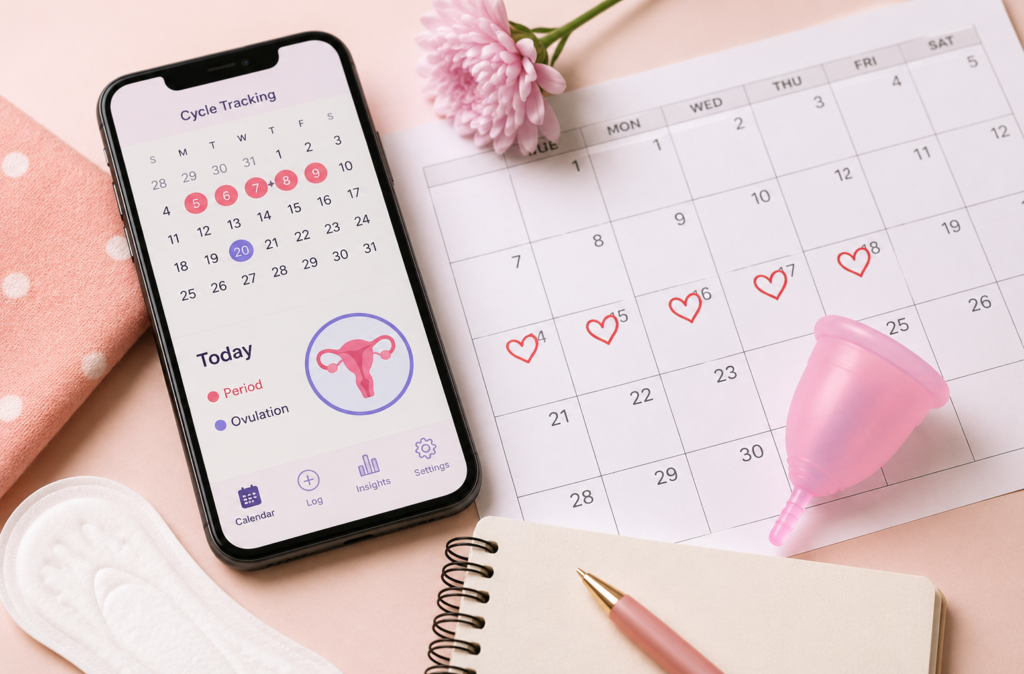
Period tracking apps log your menstrual cycle dates and symptoms to predict future periods and fertile windows. They work best as digital diaries, not medical diagnostic tools. For Pakistani women managing irregular cycles or PCOS, apps can support your routine, but they should never replace a qualified gynaecologist’s examination and advice.
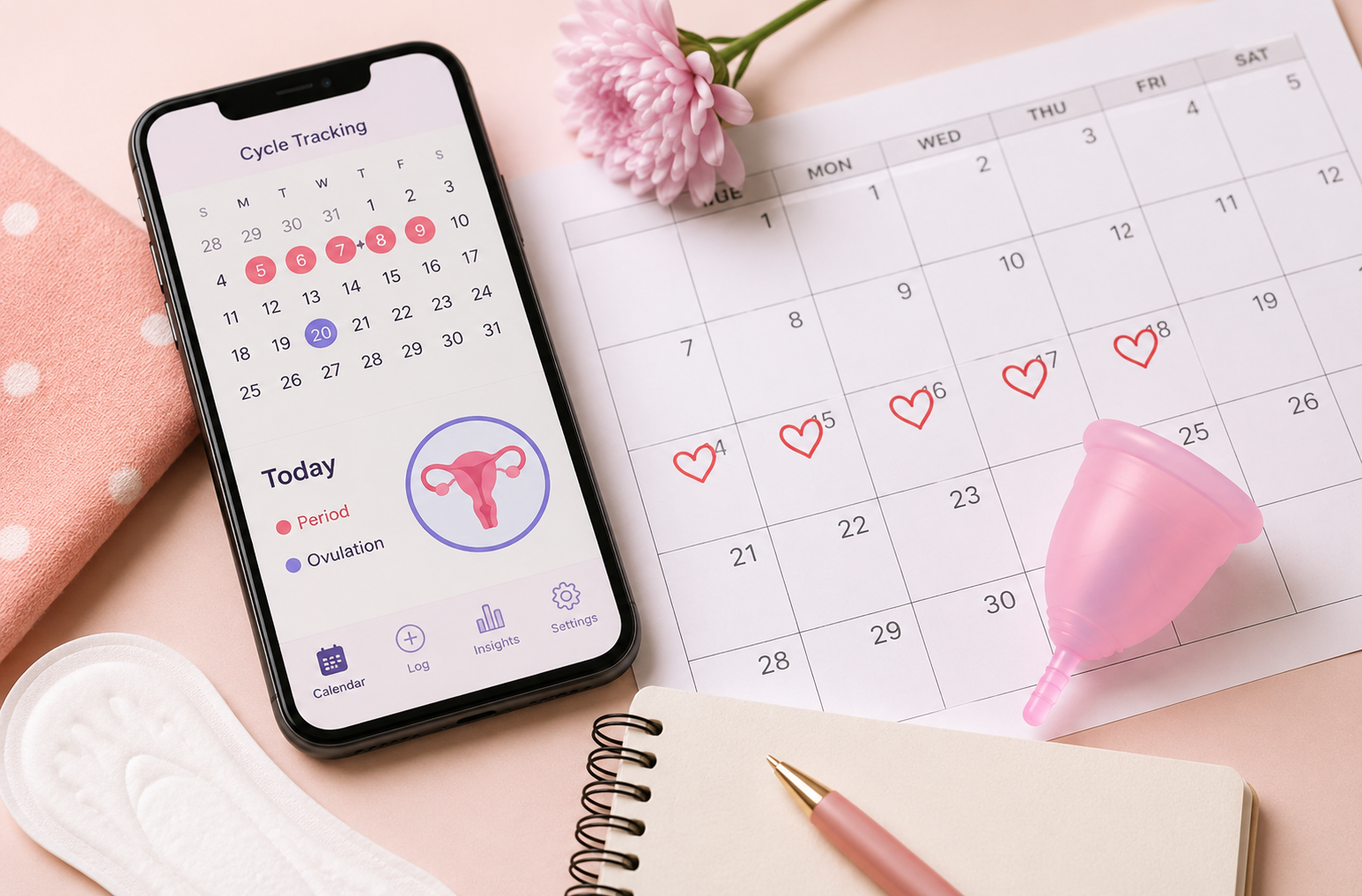
Your friend swore by her period tracker. She never gets caught without a pad, and she knows her fertile window down to the hour. You downloaded the same app, entered your last period date, and waited. Three months later, the app says you’re “late” — again — and you’re sitting in your university library wondering if something is seriously wrong.
Here’s the truth most of us miss. Period tracking apps are only as good as the data you feed them, and most default to a 28-day cycle that doesn’t match South Asian hormonal realities. If you’ve been stressing over app notifications, this guide will show you how to use these tools properly without letting them replace your own body awareness — or your gynaecologist.
What Exactly Do Period Tracking Apps Do?
Period tracking apps are smartphone programmes that record your menstrual cycle dates, flow intensity, and symptoms to forecast your next period and ovulation window. They cannot measure hormone levels or see your ovaries; they simply use algorithmic pattern recognition based on what you logged last month.
Most free versions rely on calendar math. You input the first day of bleeding, how many days it lasts, and symptoms like cramps, acne, or mood shifts. After two to three cycles, the app spots a pattern and pushes predictions to your home screen. Premium versions may offer basal body temperature charting or cervical mucus logging, but the majority of Pakistani users stick to the free tier. Think of an app as a digital diary that does maths, not a pocket ultrasound machine.
Why Period Tracking Apps Are Popular Among Pakistani Women
Pakistani women use period trackers to manage busy schedules, prepare for gynaecologist visits, and monitor conditions like PCOS in a culture where period talk is often private. Between university deadlines, office commutes on Karachi’s Red Bus, and managing period care in spaces with limited facilities, knowing when to expect bleeding matters.
Many women also use these apps to collect evidence before visiting a doctor. If your family thinks you’re too young for a hormone check, showing three months of logged cycle data can strengthen your case for a proper evaluation. Apps also help women observing Ramadan plan around their periods, and those with PCOS track whether their cycles are lengthening or shortening over time.
How to Choose a Period Tracking App That Actually Works for You
Choose a period tracking app that allows custom cycle lengths, protects your privacy, and works offline without forcing you into a 28-day default. South Asian women often have cycles ranging from 26 to 35 days, so the app must let you override standard settings during the first week.
- Ignore the 28-day assumption. Most apps preset a 28-day cycle. If yours is 32 days, fix this on day one or every prediction will be wrong.
- Check the symptom list. Does it include concerns relevant to you, like unusual hair growth, heat rashes during July periods, or dizziness from anaemia? Generic apps often miss these.
- Read the privacy policy. Some free apps sell your cycle data to advertisers. If an app demands your full name, email, and location before showing a calendar, be cautious.
- Look for offline functionality. In areas with patchy 4G or frequent load-shedding, an app that stores data locally beats one that needs constant cloud syncing.
- Consider cost carefully. Premium subscriptions range from PKR 800 to PKR 2,500 monthly. The free version of most apps handles basic logging perfectly well.
| Feature | Flo | Clue | Marham | Period Calendar |
|---|---|---|---|---|
| Free version available | Yes | Yes | Yes | Yes |
| Custom cycle length input | Yes | Yes | Limited | Yes |
| Strong privacy protection | Moderate | High | High | Low |
| Connects to local doctors | No | No | Yes | No |
| Works offline | Partial | Yes | Yes | Yes |
| PCOS symptom tracking | Detailed | Moderate | Basic | Basic |
The Biggest Mistakes Women Make With Period Tracker
The most common mistake is treating app predictions as medical diagnoses rather than educated guesses based on past data. An algorithm cannot see inside your fallopian tubes.
- Trusting predictions over your actual body. If the app says your period is due Tuesday but you feel premenstrual cramps on Sunday, pack your pads on Sunday.
- Using apps for “safe day” contraception. Calendar-based fertility awareness has a failure rate of roughly 24% with typical use, according to NHS guidance on natural family planning. Apps cannot detect spontaneous ovulation.
- Ignoring irregularity warnings. If the app flags three consecutive cycles outside the 21-to-35-day range, book a gynaecologist appointment instead of resetting the calendar.
- Logging inconsistently. Missing two months breaks the algorithm. Set a weekly reminder, not just a period reminder.
- Sharing phones without logging out. In shared-family households where cousins or siblings borrow devices, your reproductive data is visible unless you enable app locks or use a private folder.
When to Put the App Away and Call Your Gynaecologist
See a gynaecologist if your cycles fall outside the 21-to-35-day range for three months, or if you experience severe pain, bleeding between periods, or no period for over 90 days. Apps are excellent for pattern spotting, but they cannot diagnose PCOS, endometriosis, thyroid disorders, or perimenopause.
In Pakistan, where anaemia and vitamin D deficiency are common, a “late” period might signal nutritional gaps that no algorithm can detect. If your tracker is causing anxiety rather than clarity, stop checking it for one cycle and schedule an appointment with a PMDC-registered gynaecologist instead. You can read more about when to see a doctor about irregular periods on GirlBox.
Frequently Asked Questions
Are period tracking apps accurate if my cycle is irregular?
Most apps become less accurate with irregular cycles because they rely on averaging past dates. If you have PCOS or thyroid issues, use the app purely for symptom logging rather than predictions.
Is my period data safe with these apps in Pakistan?
Data protection varies. International apps may store information on servers outside Pakistan. Local apps keep data within the country, but always read the privacy policy. Avoid apps that require social media logins.
Can teenagers use period tracking apps?
Yes. For adolescents tracking their first few years of menstruation, apps help normalise cycle awareness. However, teenage cycles are naturally irregular for the first two years, so predictions should not be treated as definitive.
Do I need a premium subscription?
No. Free versions handle calendar logging, symptom notes, and basic predictions adequately. Pay only if you need features like basal body temperature charting or PDF export for your doctor.
Should I track my period if I am not sexually active?
Absolutely. Period tracking is about understanding your overall reproductive health, not just fertility. It helps you notice changes in flow, pain levels, and mood that might indicate hormonal shifts.
Period tracking apps are useful servants but terrible masters. Use one to log your cycle, note your symptoms, and walk into your gynaecologist’s office with three months of solid data. Do not use one to diagnose yourself, time contraception, or panic over a late notification when your body has always marched to its own rhythm.
Your next step is simple: download one app today. Log your last period date, disable the 28-day default if your cycles run longer, and set a weekly reminder to update your symptoms. After three complete cycles, book a consultation and show your doctor the data. That is how you deal with period tracking apps the right way.
Reviewed by Dr. Amina Rahman, Consultant Gynaecologist and Obstetrician, Pakistan
“In my clinical practice, the most overlooked issue with period tracking apps is that patients trust algorithmic predictions over their own bodily signals. I always tell women: the app is a diary, not a doctor.”