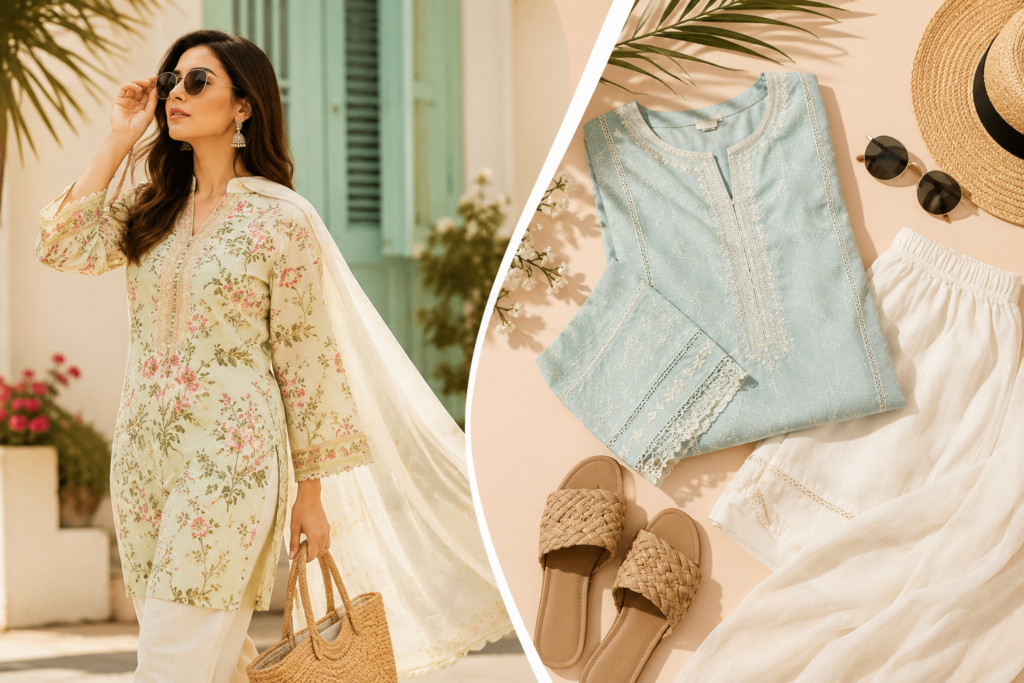
Quick Reply: Summer fashion in Pakistan prioritises lightweight natural fabrics, loose modest silhouettes, and pale colour palettes that reflect rather than absorb intense heat. The ultimate guide focuses on breathable lawn, cotton cambric, and linen pieces that keep you cool through 40°C days without sacrificing personal style or cultural modesty.
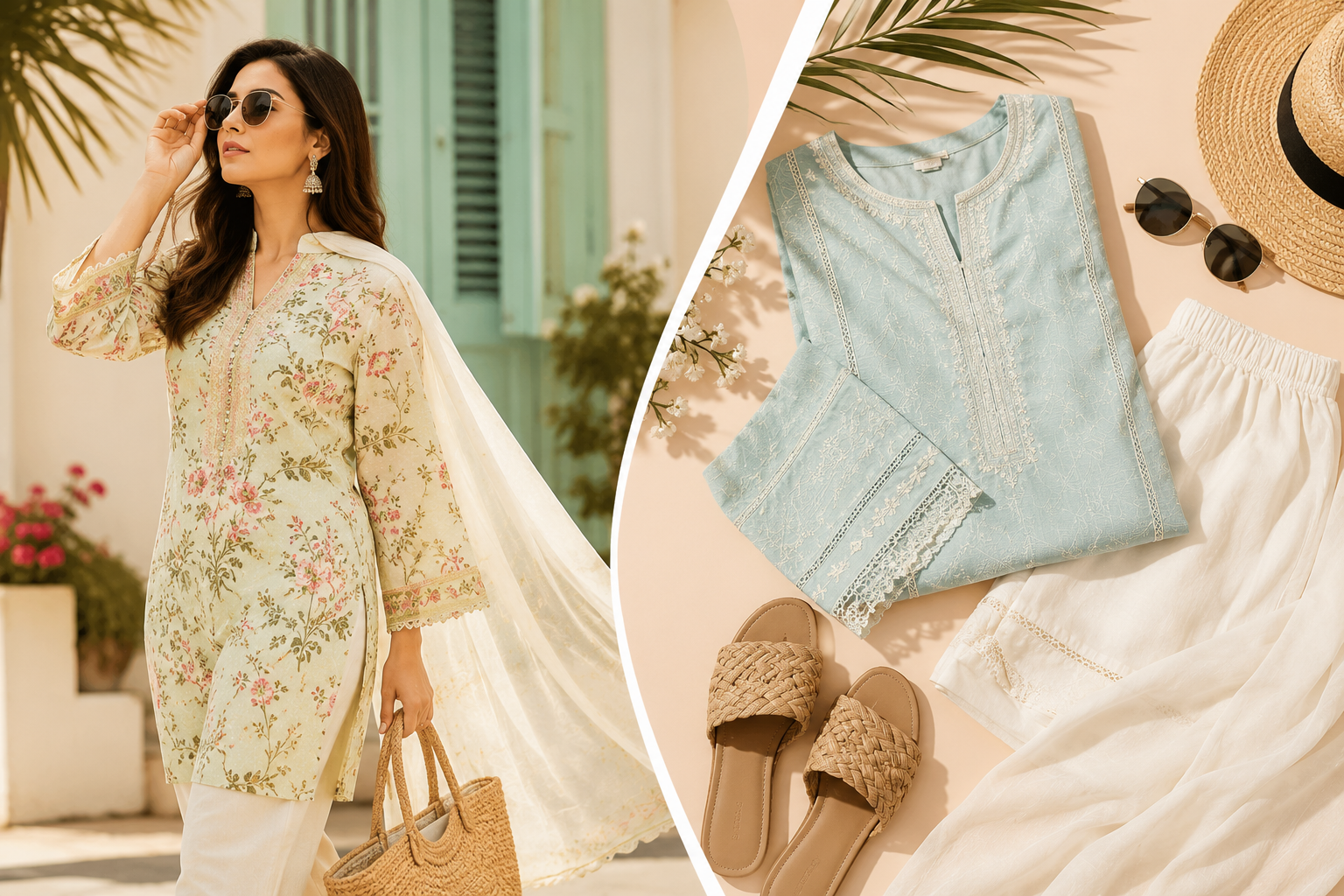
You step out of the shower at seven in the morning. By the time you have towelled off and reached for your clothes, you are already damp again. The bathroom mirror fogs from humidity that arrived before the sun did. Outside, the sky is a white haze promising another forty-five-degree day, and the thought of pulling on a heavy embroidered kameez makes you want to climb back into bed. Pakistani summer is not really a season here; it is a daily endurance test. Women across Karachi, Lahore, and Multan still manage to look polished at university, in offices, and at iftar gatherings. The secret is not imported labels or complicated layering tricks. It is knowing which fabrics actually let your skin breathe when the humidity feels like a wet blanket and the power cut has killed the fan.
Why Pakistani Summers Need Their Own Fashion Rules
Pakistani summer fashion must account for extreme humidity, intense ultraviolet exposure, and cultural preferences for modest coverage that European heat-wave advice simply ignores. A sleeveless linen dress works in Rome. It does not work for most women navigating Saddar on a Tuesday.
The humidity in coastal Sindh means sweat does not evaporate; it pools. In the dry plains of Punjab, the sun bakes dark fabric against your skin within minutes of stepping outside. Add to this the reality that many women prefer full sleeves, higher necklines, or hijab, and you quickly realise that modest summer dressing here is an engineering problem. Lawn became a national obsession for a reason. It is not merely fabric. It is climate-appropriate infrastructure that happens to come in beautiful prints.
The Only Fabrics You Need to Know
Natural fibres dominate because they wick moisture and allow air to circulate against your skin. Synthetic blends might look crisp in the shop under fluorescent lights, but they transform into personal saunas by noon.
Lawn is the undisputed queen of Pakistani summer. Woven from fine cotton threads, it is sheer enough to breathe yet opaque enough for modesty. Brands like Gul Ahmed, Khaadi, and Alkaram release volumes every March, but even budget options from local markets in Anarkali or Tariq Road use the same base fabric. A good lawn suit costs between PKR 1,500 and PKR 4,000 depending on the brand and whether it is stitched or unstitched.
Cotton cambric sits slightly heavier than lawn but offers more structure and durability. It does not wrinkle as easily and holds its shape through multiple washes. This makes it ideal for university wear or office shirts where you need to look neat until 5 pm without resembling a crushed tissue.
Linen is the premium choice for women who can tolerate wrinkles. It keeps you cooler than almost any other natural fibre. A linen kurta in ivory or sand paired with straight trousers looks expensive and feels like wearing air. Expect to pay PKR 2,500 to PKR 6,000 for a decent piece.
Chiffon and georgette should be avoided as primary shirt fabrics in peak summer. They are acceptable only as dupatta materials or overlay panels for evening events in air-conditioned spaces. Wearing a full chiffon shirt in June is essentially wrapping yourself in slightly decorative plastic.
| Fabric | Breathability | Durability | Average Cost (PKR) | Best For |
|---|---|---|---|---|
| Lawn | Excellent | Moderate | 1,500–4,000 | Daily wear, casual outings |
| Cotton cambric | Very good | High | 1,200–3,500 | University, office |
| Linen | Superior | Moderate | 2,500–6,000 | Formal work, meetings |
| Chiffon | Poor | Low | 800–2,500 | Evening dupatta only |
Colour Palettes and Prints That Survive the Heat
Pale colours reflect sunlight and absorb significantly less heat than dark shades. This is physics, not fashion theory. A mint green or ice-blue kurti will keep you measurably cooler than a black or navy one under direct sun.
That said, Pakistani women love deep jewel tones. If you must wear maroon, emerald, or royal blue, reserve them for air-conditioned evening events. For daytime survival, lean into:
- Ice blues, seafoam greens, and soft lemon — these lift your complexion and hide the faint flush that heat brings to desi skin tones.
- Classic white with colourful block prints — timeless, and the print distracts from any dust that settles during a commute.
- Beige and sand tones — surprisingly practical. They hide sweat marks and dust better than pure white, which turns grey at the collar within hours in Karachi traffic.
Floral prints return every year, but geometric block prints on lighter bases feel more contemporary and pair easily with both university backpacks and office laptop bags.
Modest Silhouettes That Do Not Suffocate
Modest summer dressing is about strategic looseness, not piling on layers. An A-line kurti with three-quarter sleeves and a lightweight dupatta draped loosely offers coverage without the greenhouse effect.
Avoid tight pencil-cut shalwars that cling to sweaty legs. Avoid full sleeves in polyester or any non-breathable blend. Avoid high necklines with heavy embellishment pressing against your throat. Instead, choose:
- Straight or slightly flared kurtis with side slits that allow air to move as you walk.
- Culottes or loose izaar trousers instead of fitted churidars that trap heat at the ankle.
- Dupattas in cotton net or lawn rather than heavy silk or brocade.
- Collarless or mandarin collars instead of closed high necks that feel like a hand around your throat.
If you wear hijab, invest in cotton jersey or bamboo under-caps. Synthetic under-scarves trap heat at the scalp and cause headaches by midday. A breathable under-cap changes your entire summer experience.
Building a Summer Capsule on a Real Budget
You do not need twenty lawn suits. You need five versatile pieces that mix and match. Pakistani mid-tier brands make this possible without touching a credit card.
- Two printed lawn kurtis from Warda, Limelight, or Nishat Linen sale racks — PKR 1,500–2,500 each.
- One white or ivory cotton cambric shirt — PKR 1,200–2,000. This is your office hero piece.
- One pair of beige or white culottes — PKR 1,000–1,800. Matches every top you own.
- One lightweight dupatta in a contrasting print — PKR 500–1,200 from any local thela.
- One pair of leather kolhapuris or breathable canvas sneakers — PKR 1,500–3,000. Your feet will thank you.
Total spend for an entire rotation: roughly PKR 6,000–11,000. Wash in cold water and dry in shade. The Pakistani summer sun fades dye faster than you think, and line-drying in direct light will turn your ice blue into dishwater grey within a month.
The Mistakes That Make You Miserable
The biggest summer fashion mistake in Pakistan is prioritising embellishment over fabric quality. Heavy gota work, dense sequins, and thick embroidery patches scratch sweaty skin and add unnecessary weight to a garment that should be floating.
Another error is wearing black for a daytime commute. It absorbs heat. You arrive at your destination looking wilted and smelling like you have been sitting in a car with broken air conditioning. Because you have.
A third mistake is ignoring the lining. Many affordable stitched lawn suits come with cheap polyester lining sewn into the shirt. Rip it out. Replace it with soft cotton voile if you need extra opacity. That polyester lining is the single reason you feel like you are wearing a plastic bag even though the outer fabric is genuine lawn.
Styling for Specific Occasions
University: A knee-length printed kurti with white culottes and canvas sneakers. Carry your dupatta in your bag until you reach campus; drape it loosely when required.
Office: A cotton cambric shirt in a solid pastel with straight trousers and closed-toe kolhapuris. Add a structured tote rather than a soft cloth bag. It signals polish without extra layers.
Iftar gathering: An A-line lawn kurta with delicate threadwork, paired with a chiffon dupatta draped loosely over one shoulder. Keep jewellery minimal; metal heats against skin and leaves marks.
Eid: This is where you wear the heavier embroidered piece. Schedule your outing for evening. Stay in lawn until you actually leave the house.
Frequently Asked Questions
What is the best fabric for Pakistani summer?
Lawn is the best all-rounder for daily wear due to its breathability, lightness, and modest opacity. For formal settings, linen offers superior cooling despite the higher price.
How can I look modest without overheating?
Choose loose silhouettes in natural fabrics. Avoid synthetic underlayers. Opt for three-quarter sleeves instead of full tight sleeves, and use a lightweight cotton dupatta rather than heavy silk.
Which colours hide sweat marks best?
Beige, sand, and light grey hide sweat marks better than pure white, which turns translucent when damp. Avoid dark navy and black for daytime; they show dust and absorb heat.
Are designer lawn suits worth the price?
Not always. The base fabric is often identical to mid-tier brands. You are paying for the print design and finishing. For daily wear, mid-range brands offer better value.
Can I wear jeans in Pakistani summer?
Only if the denim is lightweight and the cut is loose. Skinny jeans in June trap heat and restrict circulation. If you must wear denim, choose wide-leg or straight cuts in a pale wash.
Summer fashion in Pakistan is less about following trends and more about surviving the climate with your dignity and style intact. You do not need a wardrobe full of expensive suits. You need breathable fabric, pale colours that reflect the sun, and cuts that let air move between the cloth and your skin.
Your next step is simple: open your wardrobe right now. Remove anything with a polyester lining, anything black that you wear for daytime errands, and anything so tight that it leaves a mark on your skin. Replace them with one lawn kurti and one pair of loose cotton trousers this week. That is how you build a summer wardrobe that actually works.
Reviewed by Ayesha Tariq, Senior Fashion Editor and Style Consultant, Pakistan
“In my experience styling clients across Karachi and Lahore, the most overlooked cause of summer discomfort is not the heat itself, but the polyester lining inside an otherwise breathable lawn suit. Rip it out. That single change transforms how you feel by 2 pm.”