5 Home Remedies for Hair Growth Oil THAT ACTUALLY WORK
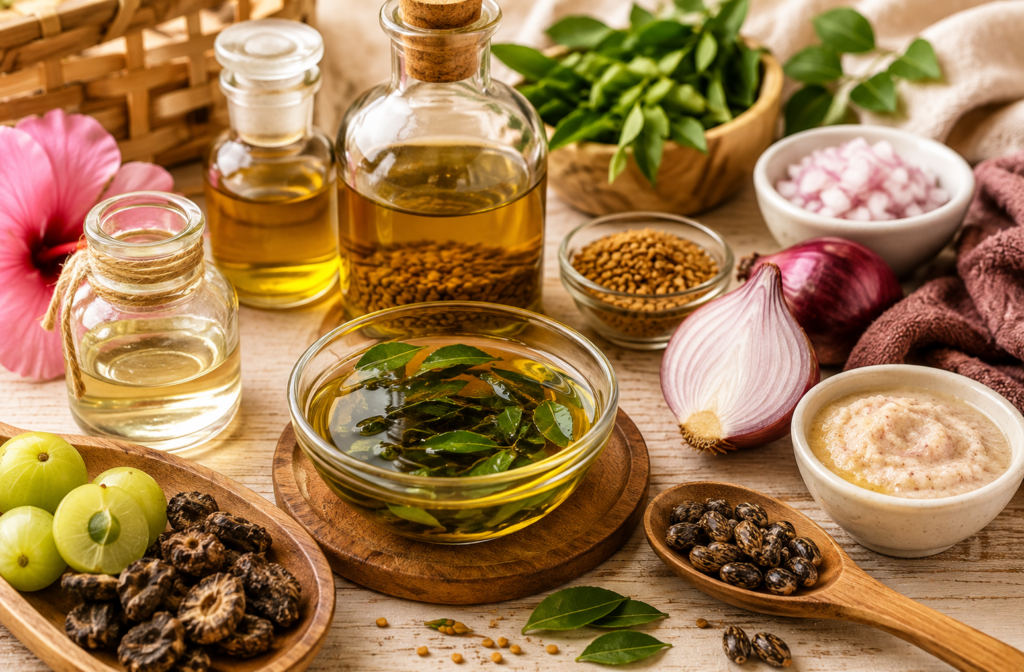
Quick Answer: Home remedies for hair growth oil use cold-pressed coconut, mustard, or castor oil infused with amla, fenugreek, or onion juice. These preparations may improve scalp health and reduce breakage in desi hair types, but they cannot reverse genetic hair loss or hormonal conditions without medical treatment. You untied your braid last night and found a clump of hair caught in the elastic. This morning, your comb carried more strands than usual. Your mother insists you need to oil your hair the way she did — warm mustard oil on Sundays, braided tight before bed. Your cousin recommends an expensive imported serum she saw on Instagram. You stand in your bathroom holding a bottle of plain coconut oil, wondering if any of this actually works or if you are just greasing your pillow for nothing. Hair fall is terrifying because it feels like you are watching yourself disappear one strand at a time. The good news is that certain home remedies for hair growth oil have genuine merit for Pakistani hair types. The bad news is that oil alone cannot fix what hormones or iron deficiency have broken. Is Hair Loss Normal for Pakistani Women? Losing 50 to 100 hairs daily is completely normal and part of the natural hair growth cycle. If you notice visible scalp patches, a widening parting, or clumps coming out with gentle tugging, that signals a problem beyond normal shedding. Pakistani women often panic when they see hair in the shower drain, but daily shedding is how your scalp makes room for new growth. The trouble starts when the rate of loss exceeds the rate of regrowth. Tight braids for school, frequent heat styling for weddings, and hijab friction all add mechanical stress that pushes normal shedding into breakage. Dr. Farah Hussain, a Karachi-based trichologist, notes that in her clinical experience, the most overlooked cause of persistent hair fall is not insufficient oiling, but iron deficiency combined with hard water damage. “Women come in with bags of supplements and six different oils, but their ferritin levels are barely measurable. No oil can grow hair on a scalp starved of oxygen.” Why Is Your Hair Falling Out? Common causes of hair loss in Pakistani women include genetic pattern hair loss, hormonal conditions like PCOS or thyroid disorders, nutritional deficiencies (especially iron and vitamin D), hard water mineral buildup, and traction alopecia from tight hairstyles or hijabs worn too snugly. Desi hair tends to be thick, wavy, and porous, which means it absorbs moisture quickly but also loses it fast in dry heat or air-conditioned offices. If you live in Lahore or Multan, the calcium and magnesium in your tap water leave a film on your scalp that blocks follicles over time. Add to that the hormonal rollercoaster of PCOS — which affects roughly one in five Pakistani women — and you have a recipe for chronic thinning. Oils can help with the surface-level symptoms: dryness, breakage, and scalp inflammation. They cannot, however, reset your androgen levels or fix your thyroid. Understanding this distinction saves you months of rubbing the wrong remedy onto a problem that needs blood tests, not bottles. 5 Home Remedies for Hair Growth Oil These five oil preparations use ingredients available at any Pakistani kitchen or thela, and each targets a specific scalp or strand concern common to desi hair types. 1. Warm Coconut Oil with Fresh Curry Leaves Heat 100 ml of virgin coconut oil in a pan until warm, not smoking. Add a handful of fresh curry leaves and let them crackle. Cool and strain. Massage into the scalp twice weekly. Coconut oil is one of the few oils that actually penetrates the hair shaft rather than sitting on top of it. Research published in the Journal of Cosmetic Science found that coconut oil reduces protein loss from both damaged and undamaged hair when used as a pre-wash treatment. Curry leaves are rich in antioxidants and beta-carotene, which support scalp health. This combination suits women with dry, brittle ends from frequent blow-drying or sun exposure. Cost: roughly PKR 200-300 for a small batch. 2. Mustard Oil Infused with Fenugreek (Methi) Seeds Soak two tablespoons of methi seeds in 150 ml of cold-pressed mustard oil for 24 hours. Gently warm the mixture, strain, and apply to roots. Leave for 45 minutes before washing with a mild shampoo. Mustard oil has been the backbone of Punjabi and Kashmiri hair care for generations. It contains alpha-linolenic acid and erucic acid, which create a warming effect on the scalp and may improve circulation. Fenugreek contains lecithin and nicotinic acid, compounds traditionally believed to strengthen hair follicles. Be cautious: mustard oil is heavy and can irritate sensitive scalps. If your skin turns red or itchy, rinse immediately and switch to a lighter oil. 3. Castor Oil and Onion Juice Blend Mix two tablespoons of cold-pressed castor oil with one tablespoon of fresh onion juice. Apply only to thinning areas using a cotton ball. Leave for 30 minutes, then shampoo thoroughly. This remedy smells aggressively, but it has the strongest clinical backing of the five. A study published in the Journal of Dermatology found that crude onion juice applied to the scalp produced hair regrowth in nearly 87% of participants with alopecia areata after two weeks of use. Castor oil is rich in ricinoleic acid, which has anti-inflammatory properties. The combination is best for patchy thinning rather than overall dryness. Do a patch test first; onion juice can burn broken skin. 4. Amla-Infused Sesame Oil Dry 50 grams of fresh amla slices in the sun for two days. Add them to 200 ml of sesame oil and heat on the lowest flame until the amla turns dark. Cool, strain, and store in a glass bottle. Amla is one of the richest natural sources of vitamin C, a nutrient essential for collagen synthesis and iron absorption. Since iron deficiency is rampant among Pakistani women, improving absorption matters as much as oiling itself. Sesame oil provides a
5 Home Remedies for Hair Growth Oil THAT ACTUALLY WORK Read More »