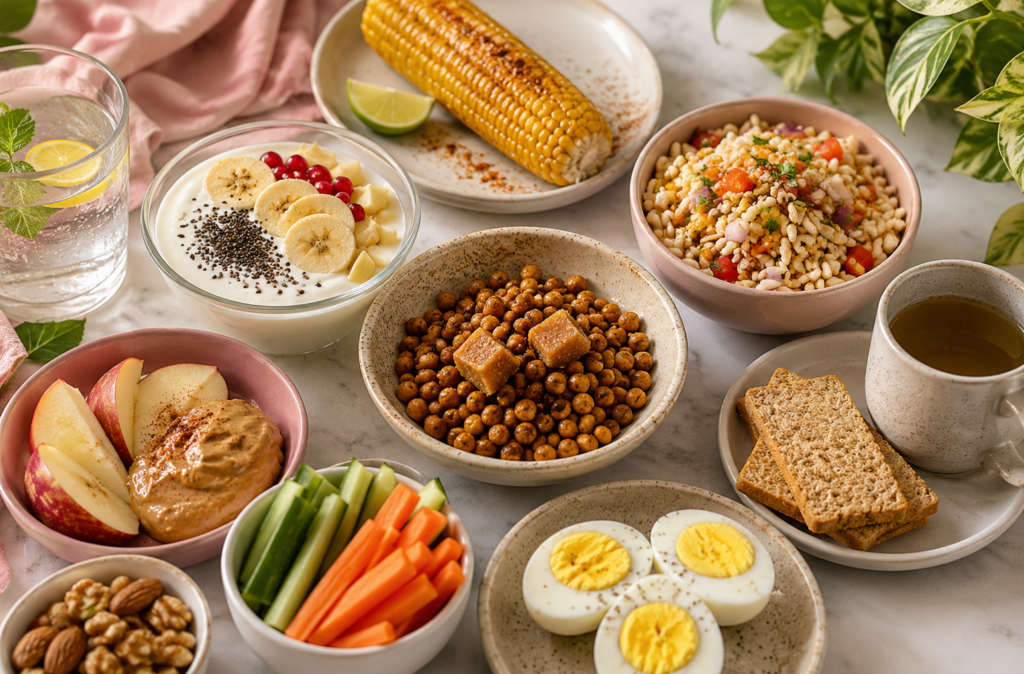
Healthy snacking ideas focus on small, nutrient-dense portions eaten between main meals to maintain energy and prevent overeating. Pakistani health experts recommend pairing complex carbohydrates with protein or healthy fats, such as roasted chana with jaggery or whole wheat roti with peanut butter. This supports stable blood sugar far better than packaged “diet” biscuits.
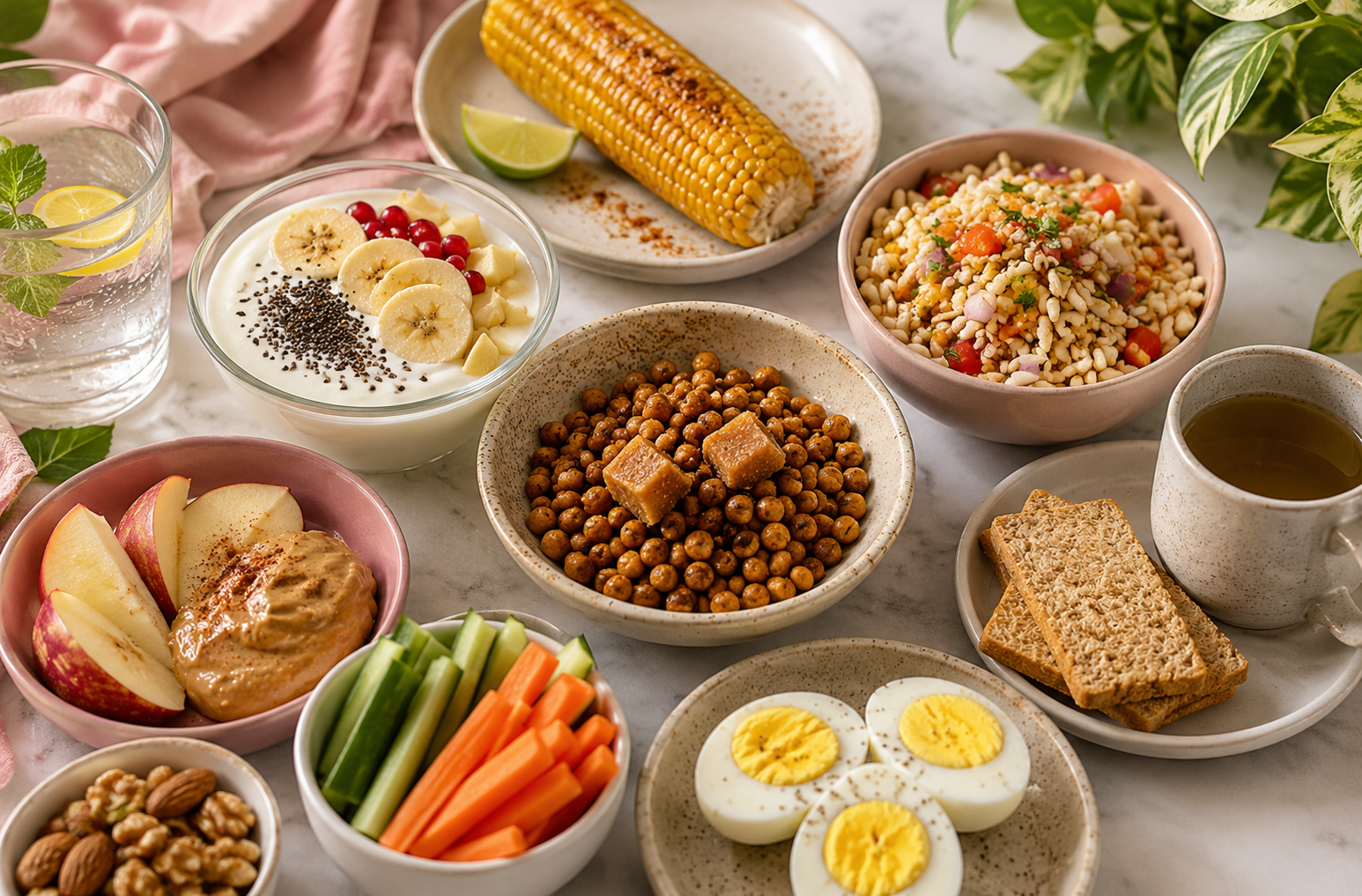
It’s 4:30 pm. You’re staring at your laptop screen at the office, or sitting through the last lecture of the day. Your stomach growls. The canteen is selling samosas and pakoras. The tuck shop has only Oreos and Kurkure. You promised yourself you’d eat better this month, but “healthy” seems to mean either expensive imported protein bars or tasteless salad leaves that wilt in your bag by noon. This is exactly where most Pakistani women give up. The good news? Healthy snacking ideas don’t require a specialty store budget or a kitchen renovation. They just need the right combinations of what you already have access to at your local thela, Imtiaz, or kitchen pantry.
Why Should Pakistani Women Care About Healthy Snacking?
Healthy snacking prevents the blood sugar crash that leads to overeating at dinner and supports metabolic health, which is particularly relevant given the high rates of iron deficiency and PCOS among Pakistani women. A well-timed snack bridges the gap between lunch and dinner without adding empty calories.
Most women in Pakistan eat breakfast around 7 or 8 am, lunch by 1:30 pm, and then nothing until 8 or 9 pm. That eight-hour gap wrecks concentration and triggers intense hunger. When you finally sit down to dinner, you eat roti after roti because your body is panicking. According to the World Health Organization, balanced nutrition across the day supports better hormonal regulation and energy distribution. For women managing conditions like PCOS or thyroid imbalance, steady blood sugar is not a luxury; it’s part of preventive health.
What Do Health Experts Actually Recommend for a Healthy Snack?
Health experts recommend snacks that pair fibre with protein or healthy fats, keeping portion sizes between 100 and 200 calories, and choosing whole foods over processed options whenever possible. The goal isn’t restriction; it’s sustained energy.
Dr. Sana Malik, a Lahore-based nutrition consultant, notes that the most common mistake she sees is women eating fruit alone. “A cheeku or banana by itself spikes glucose quickly. Add a handful of almonds or a tablespoon of peanut butter, and the same fruit becomes a balanced snack.” This combination slows digestion and keeps you full until dinner. For healthy snacking ideas that actually work, think addition, not subtraction. You are not trying to eat less; you are trying to eat smarter.
7 Healthy Snacking Ideas That Cost Under PKR 150
You can build nutritious snacks from local ingredients for less than the price of a packaged biscuit pack. These seven combinations use items available at any Pakistani market and require minimal prep.
- Roasted chana (black or white) with a small piece of gur. Roughly 15 grams of protein per cup. Buy a weekly batch from the thela for under PKR 100.
- Bhutta (roasted corn on the cob) with lemon and chilli. One cob costs around PKR 40-60 from street vendors. High in fibre, naturally sweet, and filling.
- Apple or guava slices with peanut butter and a pinch of chaat masala. Pakistani guava season runs through winter. A small apple with one tablespoon of peanut butter costs roughly PKR 60-80.
- Homemade bhel with puffed rice, chopped onion, tomato, and coriander. Skip the sev. Add a squeeze of lemon and a pinch of rock salt. Costs under PKR 50 per portion.
- Plain dahi with a sprinkle of roasted flaxseeds and seasonal fruit. Avoid flavoured yoghurt, which often contains more sugar than soft drinks. A small cup of plain dahi with toppings costs around PKR 70.
- Whole wheat rusks with a cup of green tea. Two rusks provide enough crunch to satisfy a craving without the grease of fried snacks. Pair with tea minus the three spoons of sugar.
- Boiled egg with sliced cucumber and carrot. Boil four eggs on Sunday. Keep them in the fridge. Each egg snack costs roughly PKR 40-50 and delivers complete protein.
| Snack | Approx. Cost (PKR) | Prep Time | Best For | Pitfall to Avoid |
|---|---|---|---|---|
| Roasted chana + gur | 30–50 | 0 min | Office desk | Eating too large a portion |
| Bhutta (roasted) | 40–60 | 5 min | Evening craving | Excessive butter or masala |
| Fruit + peanut butter | 60–80 | 2 min | Pre-workout | Peanut butter with added sugar |
| Dahi + flaxseed | 50–70 | 1 min | Gut health | Flavoured yoghurt with sugar |
| Boiled egg + veggies | 40–50 | 10 min (batch) | High protein | Frying instead of boiling |
| Homemade bhel | 30–50 | 5 min | Long study hours | Adding fried sev or namkeen |
| Whole wheat rusks | 40–60 | 0 min | Tea-time | Dunking in overly sweet tea |
Are Packaged “Diet” Snacks Actually Healthy?
Most packaged diet snacks sold in Pakistani supermarkets contain hidden sugars, refined flour, and preservatives that spike insulin and offer little nutritional value. Health experts advise reading labels carefully rather than trusting marketing claims.
That “high-fibre” cookie in the purple packet? It likely contains palm oil and maltodextrin. The “low-fat” chips? Extra salt and flavour enhancers to compensate for removed fat. In my clinical experience, the most overlooked cause of stubborn weight gain is precisely these supposedly healthy packaged foods that women eat between meals. If the ingredient list reads like a chemistry experiment, it is not a snack; it is processed food in disguise. Stick to items with one to three recognisable ingredients: chana, gur, egg, fruit, dahi.
How Can You Prep Snacks for a Busy Week?
Dedicate thirty minutes on Sunday to washing, chopping, and portioning snack ingredients into reusable containers or zip-lock bags. This removes the decision fatigue that sends you toward the canteen samosa at 5 pm.
Buy your chana, boil your eggs, wash your fruit, and portion your peanut butter into small jars. Keep one container at your desk and one in your university bag. When hunger hits, you reach for what is available. This simple act of self care transforms healthy snacking from an idea into a habit. If you have access to a fridge at work, store a small tub of dahi there on Monday morning. No fridge? A boiled egg and a packet of roasted chana survive a Karachi summer afternoon just fine.
Frequently Asked Questions
Can healthy snacking help with weight loss?
Yes, if done correctly. Strategic snacking prevents the extreme hunger that causes overeating at main meals. The key is choosing high-protein, high-fibre options rather than refined carbohydrates.
Is it okay to snack if I have PCOS or diabetes?
Yes, but choose low-glycemic options like boiled eggs, chana, or vegetables with hummus. Avoid fruit juices and packaged biscuits. Women with PCOS should focus on protein-forward snacks to manage insulin response.
What is the best time to snack?
Mid-afternoon, roughly three to four hours after lunch, is ideal. This prevents the energy slump without interfering with dinner appetite. Avoid snacking after 9 pm if possible.
Are imported protein bars better than desi snacks?
Not necessarily. Many imported bars contain sugar alcohols and artificial sweeteners that cause bloating. A boiled egg or roasted chana offers comparable protein without the additives, and at a fraction of the cost.
Can children eat these same snacks?
Absolutely. These healthy snacking ideas use whole foods suitable for all ages. Just adjust portion sizes and be cautious with whole nuts for very young children due to choking risk.
Healthy snacking is not about perfection. It is about having a better option ready when hunger strikes between meals. You don’t need to overhaul your entire diet. You just need to swap the canteen samosa for roasted chana a few afternoons each week, add peanut butter to your fruit, and keep a boiled egg in your bag.
Your next step is simple: pick two snacks from the list above. Buy the ingredients this weekend. Boil four eggs, roast some chana, and portion them into small bags. Place one in your bag and one at your desk on Monday morning. That is how you start.
Reviewed by Dr. Sana Malik, Consultant Nutritionist, Pakistan
“In my clinical experience, the most overlooked cause of stubborn weight gain and energy crashes is the supposedly healthy packaged snack. Pakistani women do not need imported protein bars. They need to pair the foods already in their kitchen—chana, dahi, eggs, fruit—with a little planning.”